Tuesday 4th August 2026. Each week, between 2.30pm and 3pm, I talk to Sonja McLaughlan on Track Radio about technology and sport.
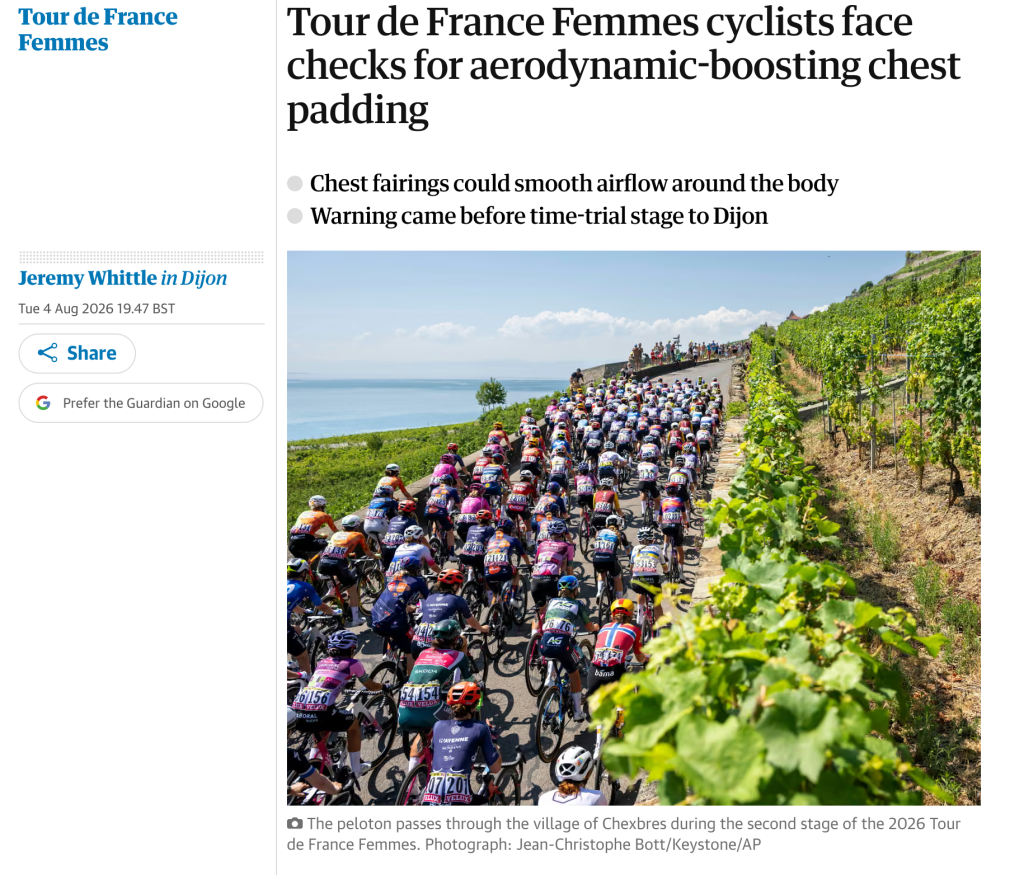
This week had an extra slot following the announcement by the UCI that they would be checking female riders for any extra chest padding that might give an aerodynamic advantage. This was the story that emerged in the Guardian and other media outlets.
There were claims that some women riders had padded their chest area with ice or other materials. Allegedly, this smoothed the airflow over the body, reducing power lost due to drag by a few percent, enough to be a performance boost. This was very much against UCI rules.
Does this really work? And if so, how?
How to reduce drag without anyone noticing
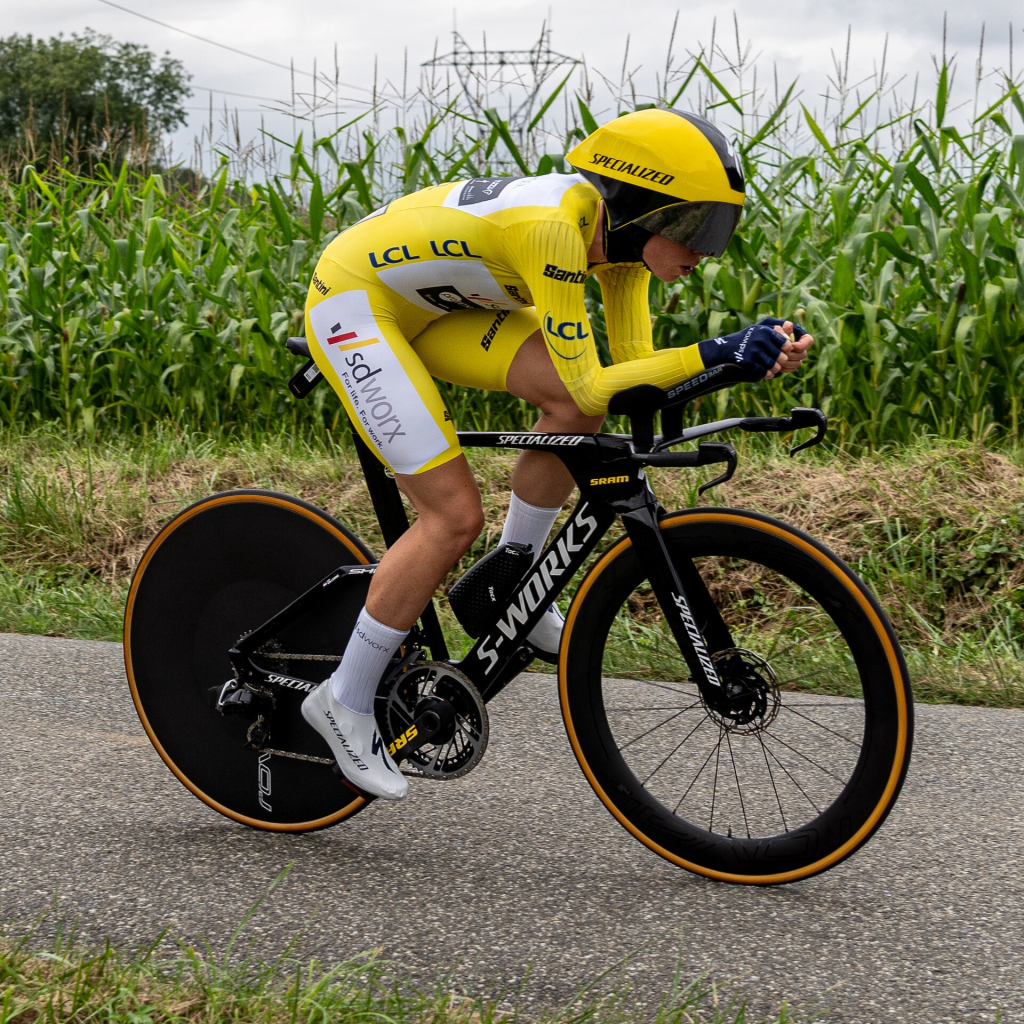
There are really only two things a rider can control when it comes to drag from the air. The first is the area presented to the oncoming air. We learn what to do from an early age: remember going down a hill as a kid and trying to go as fast as possible? You hunch down to streamline your body and automatically make yourself as small as possible. The drag is directly proportional to your cross sectional area: reduce your area by 10% and the drag goes down by the same amount.
The second thing you can control is a bit more elusive and concerns the way in which the air flows over the body. This is embodied in a number called the drag coefficient. Like the cross-sectional area, reduce this by 10% and you reduce your drag by 10%. Cyclists use lots of tricks to do this: aero helmets, clothing with ribulets to channel airflow, shaved legs and so on. The key task is to make the air flow smoothly over the body and separate as close to the rider’s rear with as small a wake as possible.
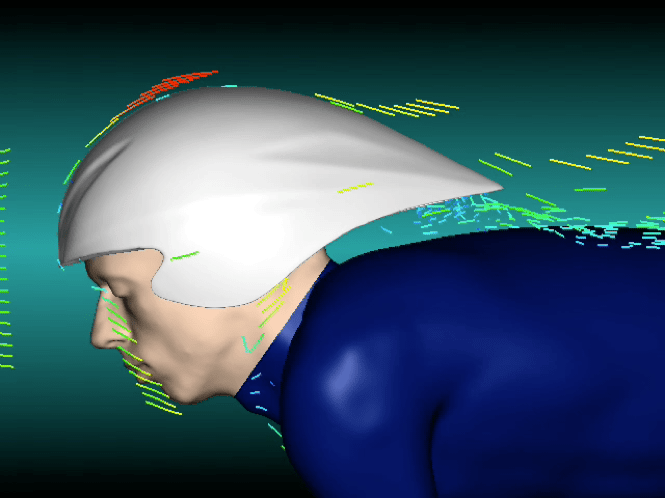
Airflow over an aerodynamic helmet in the cruise position (c) John Hart.
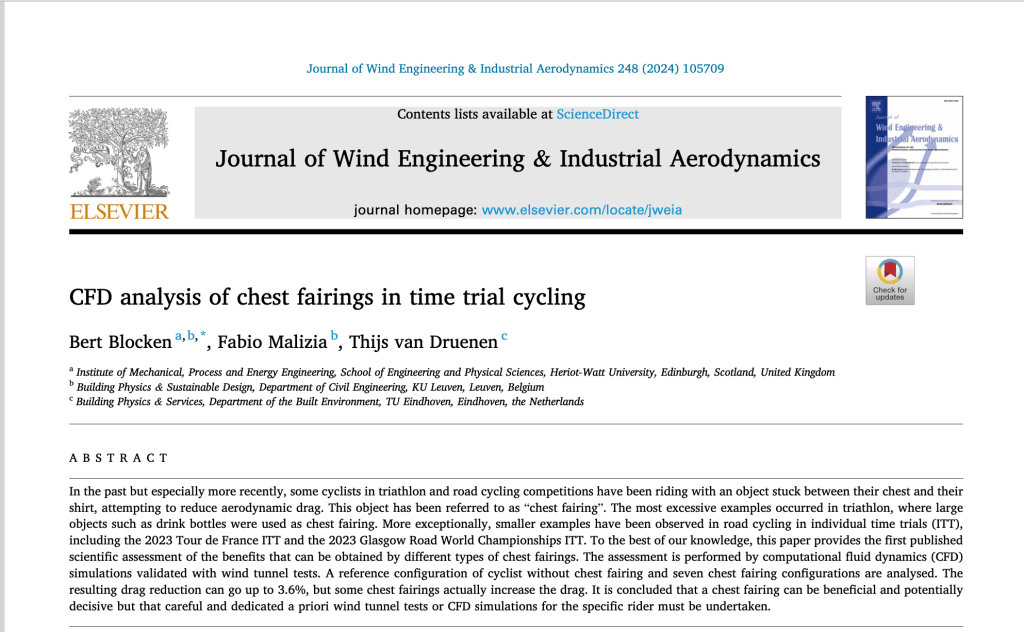
This is possible to some extent for the airflow over the head, shoulders and back, especially with an aerodynamic helmet. But underneath the body along the chest and stomach, the airflow is especially messy and contributes to a large low-pressure wake. A larger shaped chest improves this flow: at Herriot Watt University, Bert Blocken and colleagues carried out some great studies of the aerodynamics of cyclists using wind tunnels and computational fluid dynamics. A 2024 paper showed that a chest faring under the jersey could reduce drag by up to 3.6%.
The UCI probably noticed Blocken’s work: this year Jan-Willem van Schip (male) was disqualified for putting a water bottle down his jersey with the accusation that this was to improve aerodynamics (although this was down the side rather than the front). Whether anyone on the women’s tour has tried anything is now a moot point as the UCI will be checking before time trials whether they are wearing anything unusual in the chest area.
Like the controversy over penisgate earlier this year, how they’ll do this and what exactly the definition of ‘unusual’ is, isn’t clear.
Monday 3rd August 2026. Each week, between 2.30pm and 3pm, I talk to Sonja McLaughlan on Track Radio about technology and sport. Following a dramatic weekend of boxing at the Commonwealth Games, this week we talk about whether AI can judge a boxing match.
Dimeji Shittu vs Ankush Panghal
In Glasgow this last weekend, Dimeji Shittu was beaten by India’s Ankush Panghal in the gold medal bout. Shittu started off well, winning the first round unanimously. He was then deducted points by the referee for ducking his head too low and Ankush was judged to have won the last round, winning the bout overall.
Commentators weren’t happy, feeling that Shittu was by far the better boxer and should’ve won: the judges clearly disagreed. Given that scoring is so subjective, some have asked whether AI could replace judges, make it fair and far more transparent. Is AI up to the job?
This is my personal take.
iBoxer
If we’re ever going to use AI, then we’ll need data, and lots of it. Between 2008 and 2012, Dr Simon Goodwill from the Sports Engineering Research Group at Sheffield Hallam University developed a system for GB Boxing called iBoxer. It is now in its fifth Olympic cycle. Its task was to gather as much information as possible on all aspects of a fight so that tactical decisions could be made on how to approach a fight against known opposition. Video was always included.
One thing they created was a punch counter. Performance analysts watching a fight would track punches manually by pressing buttons: this allowed them to look at their total number, timing, the momentum of the fight and so on.
At their training base in Sheffield, GB Boxing also have a unique bird’s eye view of the ring which allows coaches to look at positioning, distance between the boxers and movement across the ring. All this information, combined with intelligence about every boxer they might encounter has helped GB Boxing to punch above their weight (apologies for the pun).
What would AI have to do to judge a bout?
Pass lots of exams for a start. But in terms of specifics, we need to first ask what does a judge does that AI would have to copy (and do better).
In an amateur bout, there are five boxing judges watching around the ring, all with a slightly different view. The simplest part of their task is to assess the number and quality of punches. But that’s the least of it. They also look at positioning, who is advancing, who is retreating, who is holding the centre of the ring. They try to figure out who is in control, which boxer has a clear strategy that appears to be working. If this sounds all a bit opaque, it’s because it is. A lack of transparency is one of the key criticisms of judging in boxing.
An AI system, then, would have to be video based, and would track all parts of the boxers’ bodies around the ring. It would assess boxers objectively with a set of pre-defined metrics about number of punches, punch quality, hit points, movement across the ring, momentum and control.
Quantifying these from video isn’t easy. Even counting punches is hard. Was there contact? Was it a glancing blow? Did it affect the opponent? I once asked a boxing coach what the definition of a good punch was.
“Ooomph,” he said, doing some sort of air punch with his fist.
“One with realpower,” he added.
That was all I got. He knew instinctively what a good punch was from looking at hundreds of fights, but couldn’t really come up with a useable definition. In physics terminology ‘power’ isn’t even the right word (throughout the sporting world power is used as a proxy for force or impulse). An AI system processing video might be able to estimate impact forces using Newton’s laws much like Hawkeye and other systems use lift and drag forces to create trajectories of the ball around a tennis court or a football stadium. But calculating multi-body forces of boxers from video is a whole new ball game (apologies for another pun).
A different approach would be to ask lots of judges to assess the same videos of boxing matches, score them and use the results to train an AI system. But then we’re back to the original problem: judges aren’t consistent and the AI would inherit the inconsistencies.
An AI judge: Oleksandr Usyk vs Tyson Fury
And yet it appears to have been done. In 2024, an AI judge ran alongside three judges in a professional fight between Oleksandr Usyk and Tyson Fury. The only thing I could find out about the AI judge was that it gave the same result as the human judges (an Usyk win). There was no information on how it worked and no data came out apart from the final score.
My guess is that it was probably an automatic punch counter with statistics attached, although I’m happy to be proved wrong. The lack of transparency is really not helpful. We need to be able to trust systems like this and we can only do that with the evidence before our eyes.
How AI might help
GB Boxing have arguably the best boxing performance analysis system in the world (of course, I would say that). Often the boxer has to beat both the opponent and the judges, particularly in fights with a partisan crowd. Shittu had a game plan and knew exactly what he was supposed to do to win. He was magnanimous in defeat.
“Whatever the referee says goes”, he said.
“If I’m sitting here blaming judges, blaming refs,” he said, “I’m not going to get better.”
He and the coaches will look at the bout afterwards to see what went wrong. Given the immense amount of information in the iBoxer database, they might even be able to understand how much was boxer error and how much was judging bias. Training an AI model with the data might enable them to predict what to do to guarantee a win if a similar opponent, judges and referee came up again.
I should imagine, not losing two points for ducking his head will be a start.
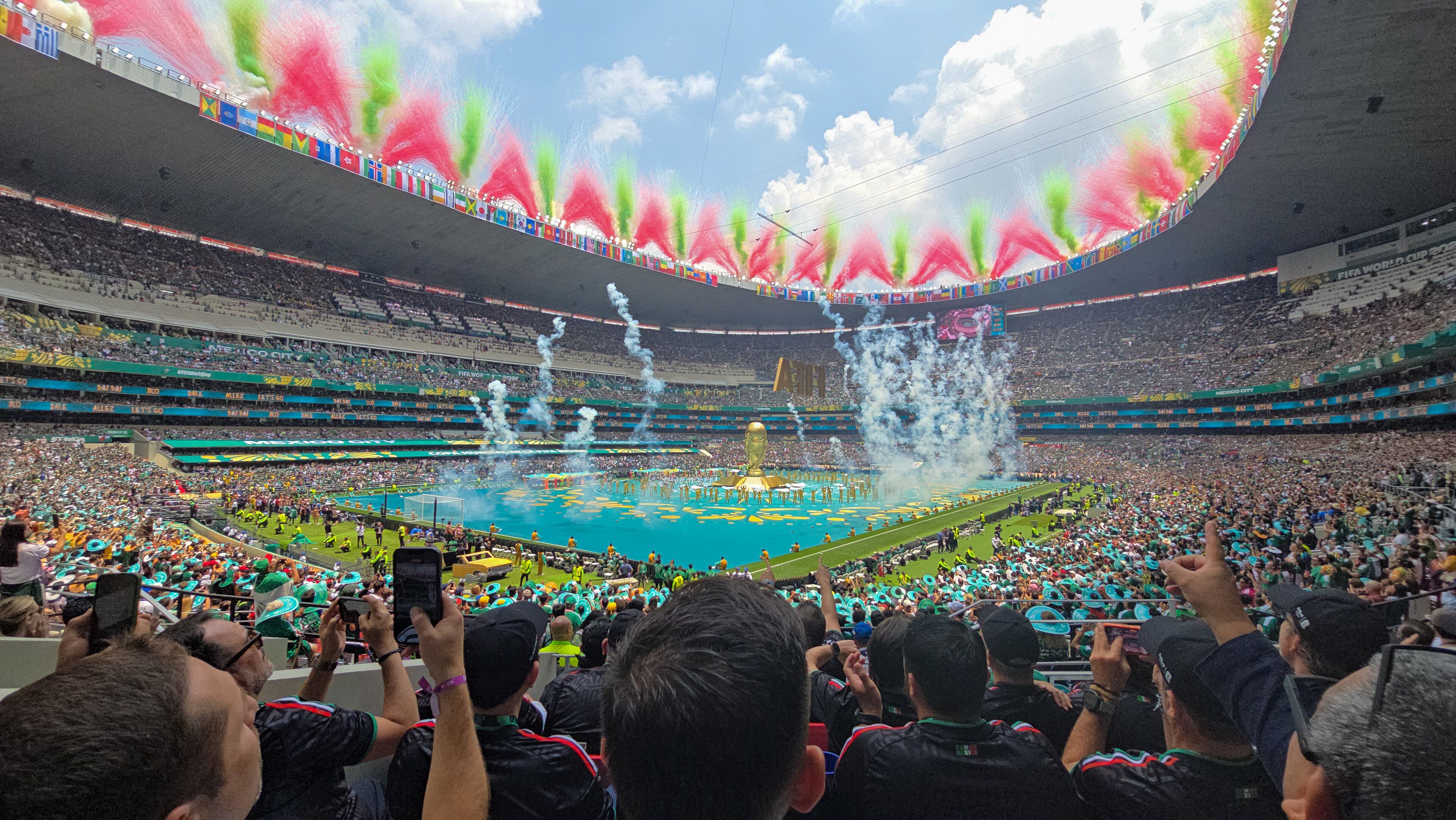
Wednesday 1st July 2026. Each Wednesday, at around 2.30pm, I talk to Sonya McLauchlan on Track Radio about technology and sport. This week it’s a bit more mathsy than normal as we talk about the FIFA World Cup and the effect of FIFA’s increase in the number of teams from 32 to 48.
Why did FIFA do it? What effect did this have and has it ruined the tournament?
FIFA’s rationale
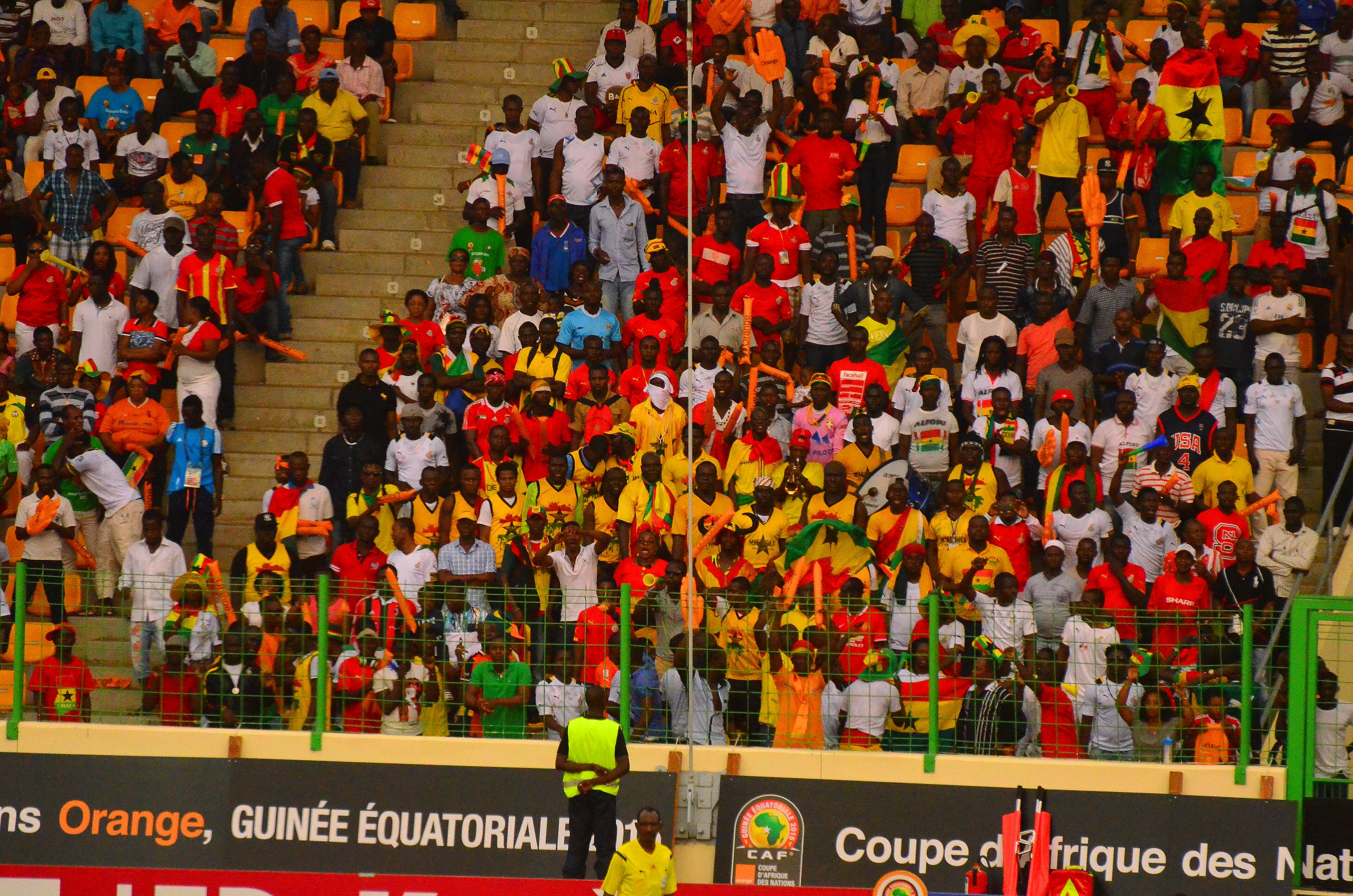
It’s hard not to think that all FIFA wants to do is squeeze as much money out of the tournament as they can. There are now 104 games rather than 64, representing a potential 62.5% increase in income (even before dynamic pricing). There’s also a bit of politics going on too: help lower ranked teams to get to the world cup finals and maybe they’ll vote for you when the next election takes place.
But what about the actual sport, arguably the most important bit? If the number of teams in the group stages increases, then the ranking of the teams must surely decrease and the competitive nature of the tournament will suffer.
Now that the group stages are over, is this what happened?
Team rankings
Back in 2022, the rankings of the teams that qualified for the tournament went from Brazil ranked 1st down to Ghana, ranked 61st. Ordering teams from best to worst ranking, the teams in the middle were Senegal and Wales, ranked 18th and 19th.
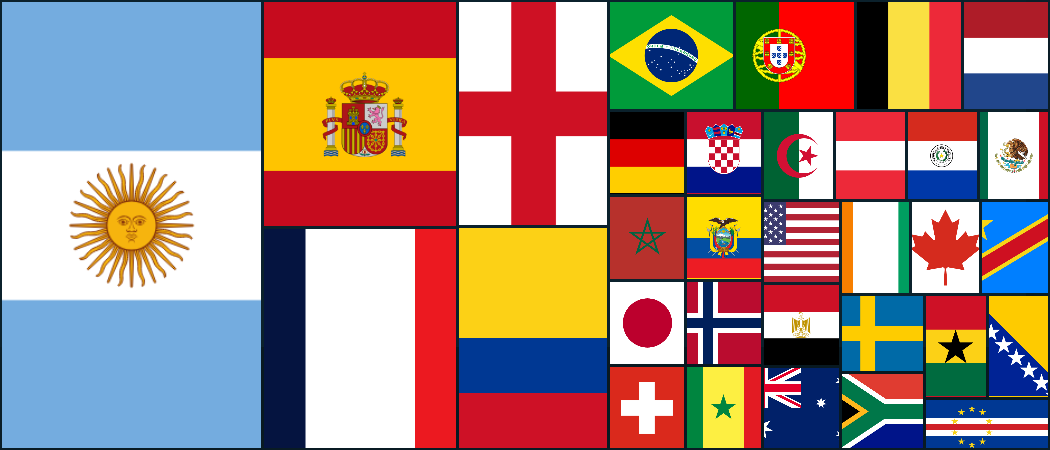
In 2026, the teams went from Argentina now ranked 1st down to New Zealand, ranked 85th. The teams in the middle this time were Australia and Algeria, ranked 27th and 28th. It’s clear, then, that the overall ranking of the teams has dropped in the middle by about 9 ranking places and by 24 places at the bottom. Importantly, seven teams had lower rankings than the lowest in 2022.
Effect on goals scored
In 2022 there were 2.5 goals per match; this year is was 3 per match, an increase of a goal every two matches. This could have been due to a number of things. Perhaps a more attacking style at the tournament? Or maybe better teams scoring more goals against weaker ones?
Have the games become less competitive?
It’s possible that the increase in goals scored is because of a decrease in competitiveness at the tournament.
‘Competitiveness’ is tricky to measure. You’ll not be surprised to hear that there are nerds out there who think about this sort of thing all the time. A common methodology is called ELO: no, not Jeff Lynn’s fantastically successful band, but a method devised by chess master and physicist Arpad Elo to quantify skill in chess and use it for ranking. FIFA use a version of this they call SUM.
ELO is a little complicated for a short blog: if you want to go there, read a great series of articles by economics experts at the Economics Observatory. If you want a quick and dirty approach, stay here (and listen to real economists howl with derision).
Use this trick to work out competitiveness in a league
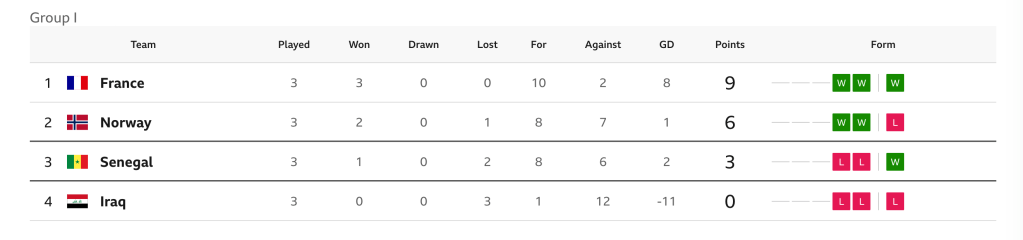
A trick I’ve always used when perusing tables in the group stages is to add up the total number of points in the table. In a league of four teams, there are six games. If there is a lack of competitiveness between the teams, then the higher ranked team will win every time and there will be six wins in all and a total of 18 points. This happened in France’s group, Group I.
The opposite, where there is absolute competition, is where teams cancel each other out and every game is a draw. In this case, the total number of points is 12 (remember that each team gets a point each so the total number of points handed out in a draw is two). I couldn’t find an instance in any FIFA world cup where this happened, although England got close in 1990 when their table had only one win (England 1, Egypt 0) and the other five games were draws. (England not competitive? Who’d have thought).
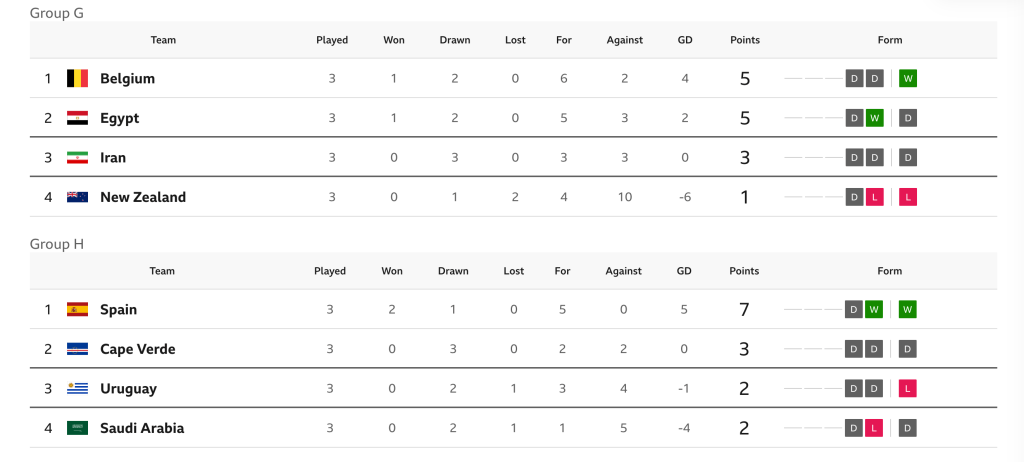
The two least competitive groups this year were Groups G and H with four draws and just two wins, giving 14 points in total.
How does this compare with the world cup in 2022?
In 2022, every group had four or five wins giving either 16 or 17 points. This year, nine of the 12 tables also had four or five wins but, as we’ve seen, two had just two wins and four draws (14 points) and one had six wins (18 points).
It seems, then, that the consequence of going to 48 teams is that the group outcome is much more variable.
Has this helped lower ranked teams?
We are now in the round of 32 with the same number of teams as at the start of the world cup in 2022. How do the rankings of the teams compare? The rankings go now from Argentina in 1st down to Ghana in 73rd. Back in 2022, the lowest ranked team 61 (by coincidence, Ghana). In this year’s remaining 32, we have three teams left with lower rankings: Bosnia-Herzogovina (64th), Cape Verde (67th) and Ghana (73rd).
The answer then, is yes: the new format has allowed lower ranked teams to progress.
What is likely to happen in the knockout stages?
History and statistics tell us that these lower ranked teams are unlikely to progress much further. The Economics Observatory gives the chances of progression for Bosnia-Herzogovina, Cape Verde and Ghana as being pretty minimal. A final with teams from Europe or South America seems pretty certain.
Is FIFA’s new format a success?
From FIFA’s point of view, it’s probably been seen as a success. The average number of goals has increased; seven teams at the tournament were ranked lower than the lowest in Qatar; three have progressed to the round of 32.
This seems a pretty good outcome for these countries that would have had little chance previously of reaching the knockout stages of the world cup. And the massive increase in the number of matches gives FIFA plenty of money to splash around lower ranked countries, and potential future votes to count upon.