Tuesday 4th August 2026. Each week, between 2.30pm and 3pm, I talk to Sonja McLaughlan on Track Radio about technology and sport.
This week had an extra slot following the announcement by the UCI that they would be checking female riders for any extra chest padding that might give an aerodynamic advantage. This was the story that emerged in the Guardian and other media outlets.

There were claims that some women riders had padded their chest area with ice or other materials. Allegedly, this smoothed the airflow over the body, reducing power lost due to drag by a few percent, enough to be a performance boost. This was very much against UCI rules.
Does this really work? And if so, how?
How to reduce drag without anyone noticing
There are really only two things a rider can control when it comes to drag from the air. The first is the area presented to the oncoming air. We learn what to do from an early age: remember going down a hill as a kid and trying to go as fast as possible? You hunch down to streamline your body and automatically make yourself as small as possible. The drag is directly proportional to your cross sectional area: reduce your area by 10% and the drag goes down by the same amount.
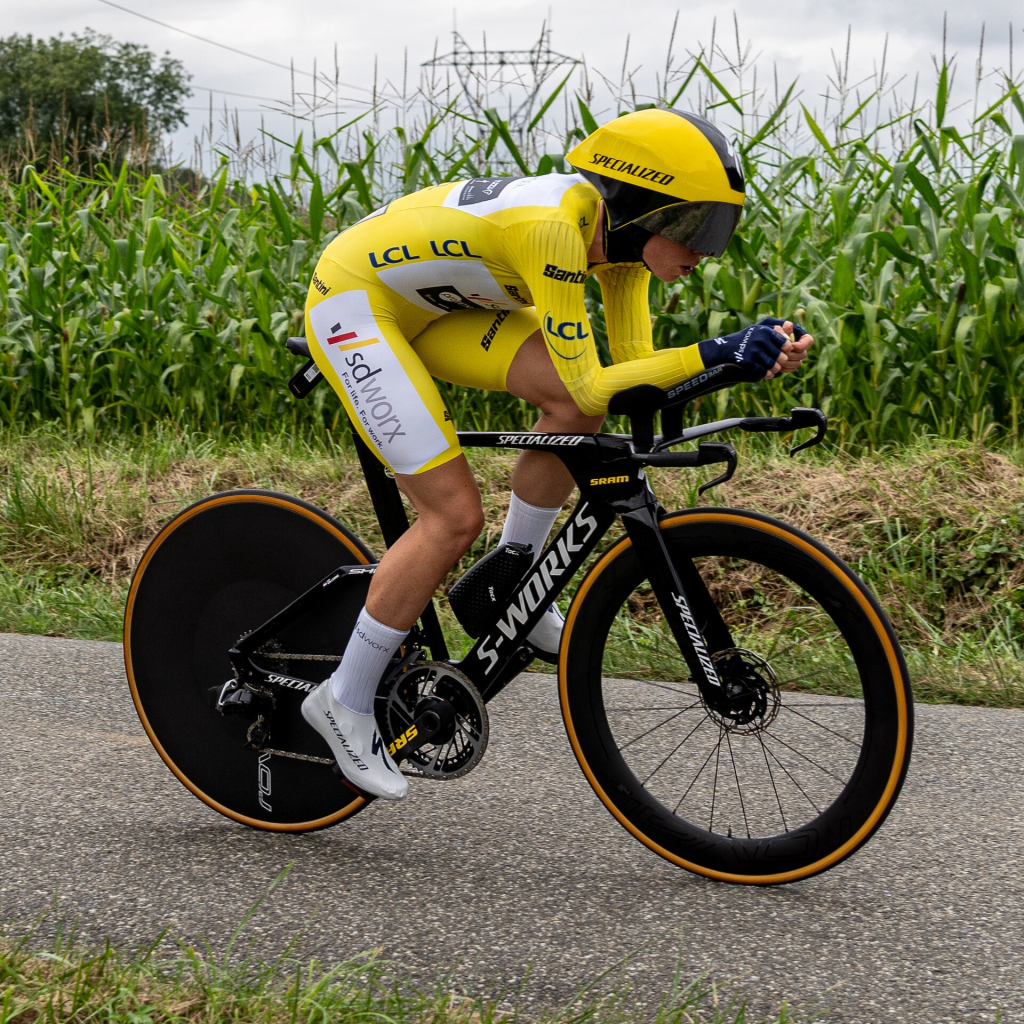
The second thing you can control is a bit more elusive and concerns the way in which the air flows over the body. This is embodied in a number called the drag coefficient. Like the cross-sectional area, reduce this by 10% and you reduce your drag by 10%. Cyclists use lots of tricks to do this: aero helmets, clothing with ribulets to channel airflow, shaved legs and so on. The key task is to make the air flow smoothly over the body and separate as close to the rider’s rear with as small a wake as possible.
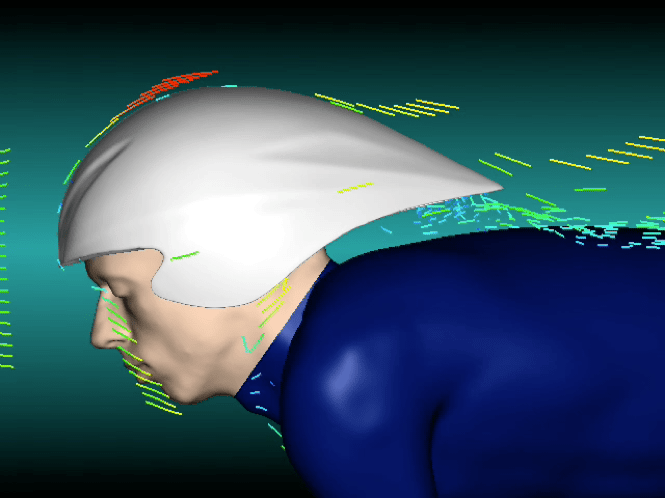
This is possible to some extent for the airflow over the head, shoulders and back, especially with an aerodynamic helmet. But underneath the body along the chest and stomach, the airflow is especially messy and contributes to a large low-pressure wake. A larger shaped chest improves this flow: at Herriot Watt University, Bert Blocken and colleagues carried out some great studies of the aerodynamics of cyclists using wind tunnels and computational fluid dynamics. A 2024 paper showed that a chest faring under the jersey could reduce drag by up to 3.6%.
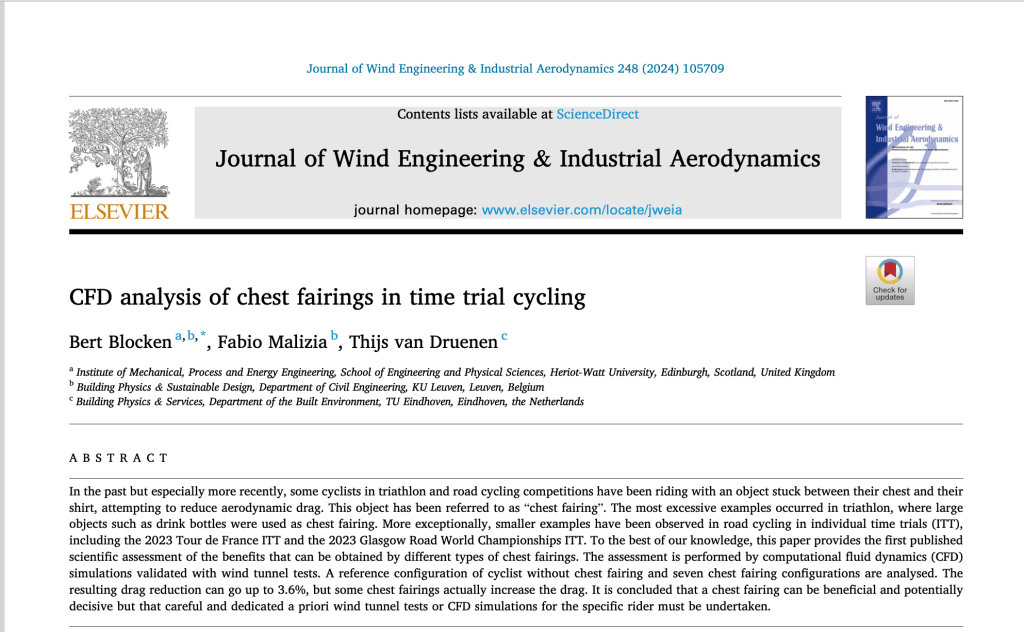
The UCI probably noticed Blocken’s work: this year Jan-Willem van Schip (male) was disqualified for putting a water bottle down his jersey with the accusation that this was to improve aerodynamics (although this was down the side rather than the front). Whether anyone on the women’s tour has tried anything is now a moot point as the UCI will be checking before time trials whether they are wearing anything unusual in the chest area.
Like the controversy over penisgate earlier this year, how they’ll do this and what exactly the definition of ‘unusual’ is, isn’t clear.

