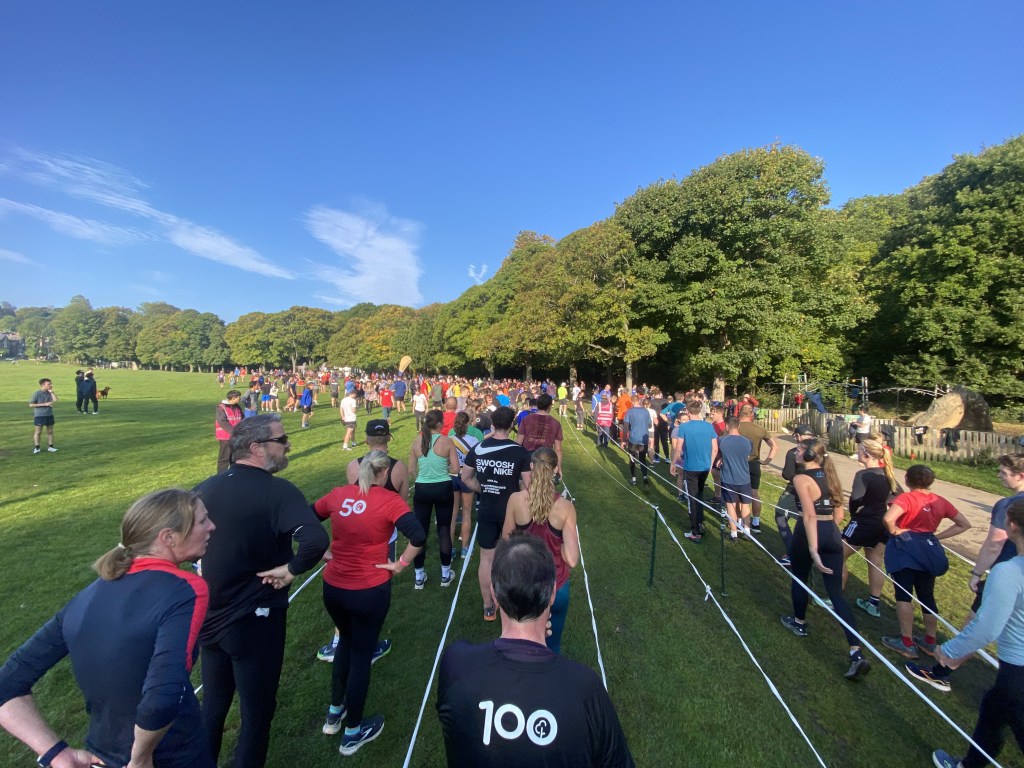
My local parkrun at Sheffield’s Endcliffe Park this last weekend was a biggie. It could’ve been the weather, it could’ve been the fact that that the university students were back, or it could’ve been that people had heard it was parkrun’s 20th birthday. By chance, our latest parkrun research paper was due to come out around now so we’d been able to time it to coincide with the birthday celebrations. It had taken me around two years to write, because we were trying to do something difficult: work out the value of parkrun.
£667m per year: really?
If want to know the full gory details, it’s here, in Plos Global Public Health. The method once you know how to do it is remarkably simple: you ask a government-mandated question about wellbeing, the answer to which economists have worked out the value of. The question is this:
“Overall, how satisfied are you with your life nowadays? where 0 is ‘not at all satisfied’ and 10 is ‘completely satisfied’.”
The trick is that, using this scale, a change of one point for a year (per person) is called a WELLBY (short for wellbeing-year). Economists tell us that this is worth £13,000. We found that after six months of parkrunning in 2019, people’s life satisfaction increased by just over a quarter of a point, valuing the change at £3,341 for a full year or £1,670 per person for the half year. There were four hundred thousand unique parkrunners that year making the total £667m.
Is all this due to parkrun?
The big question is, how much of any life satisfaction change is due to parkrun? Was it simply the number of parkruns they did? If this was the case, then the effect might be pretty small as around 60% only did only one or two parkruns. In this scenario, we estimated that only 6.4% of the £667m was due to the parkruns (or walks) themselves, meaning parkrun was worth only £40m. Even at this lowly level, every £1 invested in parkrun was worth £16.70 to the economy.
What if the life satisfaction was due to the health and social impact of parkrun? Physical health, mental health, the number of new people met and so on. In this scenario, we estimated that 27.1% of the £667m was due to parkrun, or around £226m. Every £1 invested in parkrun would be worth £98.50 to the economy.
How does parkrun work?
Our research shows that as activity increases, both mental health and physical health scores increase and that this leads to better life satisfaction. The key message here is that the £667m is real: if parkrun was to vanish overnight, then the wellbeing of parkrunners would drop a little. Current research tells us that this would have knock on effects for mental health, physical health, confidence and social connections. Illness would probably increase a little too, and performance in the workplace would drop. The government would have to pay at least £667m to get their life satisfaction back to where it was before.
parkrun (usually written with a small ‘p’) is 19 years old: still a teenager but with a good idea of what it wants to be when it grows up. In this article, I describe how parkrun has evolved during the first quarter of this century into one of the most important public health initiatives in the world.
Copyright parkrun
A first parkrun
Ben asked me if I wanted to do parkrun.
“What’s park run?” I asked.
“It’s new,” he said. “Park run – it’s a run in the park; that’s its name, park – run.”
“It’s free,” he added, for impact.
I frowned as he repeated the words park and run as if it would bring clarity. “Park run – park-run – parkrun.” The words became meaningless.
“I can run in the park whenever I want,” I said. “I don’t get it – what’s the point again?”
“It’s five kilometres and you get an official time – it’s a bit like a time trial; we can use it for training.”
Even as a researcher into sport I was dubious and played for time: “When is it exactly?”
“Saturday at nine”.
In the morning? On a Saturday? On my lie-in day? “I’ll think about it”, I muttered non-committedly.
As the weeks passed, I heard others talk about parkrun – how great it was, how much fun it was. People shared their times and commented on who they’d seen there. Repeatedly, they asked me if I’d done it: “You’d enjoy it”, they said.
Finally, after a month I gave in. I could say I’d done it and then they’d leave me alone.
I registered online the week before and fought valiantly with the printer to produce a personalised identity card with a barcode. I had no problem getting up on the Saturday – the nerves woke me. I cut out one of the eight barcodes from my printed A4 sheet and jogged down to the park with a small backpack bouncing around my shoulders; taking no chances, it carried a waterproof, hat, gloves, water and a banana.
I had two fears: one, that I wouldn’t know anybody and, two, that I’d come last. I’d never been particularly good at sport: “enthusiastic” said my school reports. I think if I’d been a dog, I’d have been a red setter, tongue lolling and legs flailing as I chased imaginary birds.
I arrived at the park, carefully timing my appearance to minimise standing around so that I wouldn’t look like Billy-no-mates. It was surprisingly busy, a few people already lined up and ready to go – a colleague waved at me and I waved back. Ryan Amos – the event director – wore a bright tabard and was drawing people towards him: “Briefing for first timers!” he shouted. I shuffled over to join them.
He explained the route around the park, that it was two laps and that the park didn’t belong to us – “so be courteous to others”. Once we’d finished, someone would give us a token which a volunteer would scan along with my barcode to match them together; the results would be online later that day. I pulled the barcode out of my pocket – it was already battered. Oh well, I wouldn’t be needing it again.
I threw my black kitbag onto a small pile of identical black kitbags, wondering if I’d ever see it again, took a deep breath and wandered over to the start. The front consisted seemed to consist entirely of skinny 20- or 30-somethings in vests, fiddling with their watches. I walked down the queue and found Ben about a quarter of the way along. I joined him, feeling very much a fraud.
“You made it!” he said cheerfully.
I looked around: dozens of people, as many women as men. There were just a few oldies like us. “They look a bit fast,” I said, nodding at those in front, and shuffled backwards down the queue.
Ryan stood with a stopwatch at the head of the runners. WIthout warning, he shouted, “Go!” (this would be his style for years to come). The vests shot off into the distance while I lumbered past the start. After a minute, I cursed: my shoelaces had come undone. I tied a double knot and sprinted on, surprised by my anger. I quickly ran out of steam and slowed down to a plod. Two laps later I attempted another sprint – this time through the finishing line.
Gasping for breath, I stopped my watch and someone handed me a little plastic token. I saw a volunteer looking expectantly in my direction and I shuffled over. “Barcode?” she said. I pulled a damp bedraggled barcode out my pocket and she aimed a small electronic device at it so that a red laser line quivered across its black stripes. She waved the device around as the paper started to wilt and we held our breath. She tried different angles and distances then, suddenly, it bleeped. She smiled and we breathed out.
“Token?” she said, putting out her hand. I passed it over and with a flash of red, the scanner bleeped again.
She looked up and grinned at me. “Well done, Steve”.
I walked away wondering how she knew my name. I looked down at my barcode and there it was written just above my number. Hmm, I’d have to cut out another one and put it in sticky-backed plastic. I should also double knot my shoelaces next time.
With a surprise, I realised I was coming back.
parkrun’s evolution
By the time I did my first parkrun, it was already five years old, having started way back in 2004 by Paul Sinton Hewitt at Bushy Park in London. Initially, it was a time trial for anyone who wanted one, but transformed into parkrun during 2008 and from then on spread across the UK and the world – it’s now in 22 countries worldwide with more than three hundred thousand parkrunners each weekend, supported by tens of thousands of volunteers.
Looking back at the results of my first parkrun (Endcliffe Park, Sheffield, 14 August 2010), there were just 72 runners: the first finished in just under 16 minutes, the last in 37. Thirteen years on, it has been transformed and there are regularly more than 600. While that first one felt very much like a race, it now feels more like a social event interrupted by a run. Of course, there are still the vests sprinting off at the front, but behind them are gaggles of families and friends. I have to shoe-horn myself into my regular slot somewhere just ahead of the middle (I still arrive only just in time). One of the biggest changes is the age of the runners. There are now more children at Endcliffe Park than the totality at the event 13 years ago, and the oldest runners are in their 80s.
Stand at the start of a parkrun and you can see the whole world go past: mothers and fathers, sons and daughters, grandparents, babies in buggies, yappy dogs, and friends chatting away merrily. Almost weekly, there will be someone in fancy dress wearing a ribbon with the words ‘bride’.
You don’t have to worry about being last anymore because there is always a volunteer tail-walker. The fastest time is about the same as 13 years ago but the longest is now over an hour. Parkrun HQ are really proud that the average time has gone up by more about a third from 22 to 29 minutes. Why would they be happy that people have got slower? Simple: it reflects parkrun’s three-pronged success story. First, there are so many people now that it can take a half a minute just to get across the start line. Second, parkrun has been going so long that there are a quite a few regulars – like me – who have got older and slower. Third, and most significantly, parkrun now attracts many who are new to physical exercise (or, at least new since they left school): these, too, are slower.
Why parkrun works: what the research tells us
What is it that attracts so many people to parkrun? Firstly, there’s the practicalities: it’s free and is at the same time, on the same day, in the same place and with the same set-up. Take your parkrun barcode to any event in the world and you know exactly what to expect. Importantly, there’s no pressure to take part if you don’t want to. As parkrun grew in size, its mission evolved from a parkrun for anyone who wants one to a healthier happier planet. This reflects the realisation that with the change in the demographic of parkrunners, fewer were interested in the performance aspect and more interested in the potential health benefits.
A decade ago, parkrun set up its parkrun Research Board: in 2015, I was lucky to be asked to chair it and base it at the Advanced Wellbeing Research Centre. Its main task was to coordinate those around the world (academics mostly) who saw parkrun as a rich source of participants for research. Since its inception, the Board has reviewed around 240 proposals with a third of them approved. Along with seven PhDs, this research is worth in excess of £1.5m.
These efforts have produced more than 75 full journal articles, with at least 30 of them open access: themes include social prescribing, mental wellbeing and the impact of volunteering (see the Virtual Article Collection below). In total, the articles have been downloaded around 120,000 times and around half of parkrun papers are in the top 5% of papers for engagement by the general public (as measured using the Altmetric Score), pretty good going for academic research.
To answer the question of why parkrun works, you first need to ask who parkrunners are. We answered this in a paper published in the British Journal of General Practice called parkrun and the promotion of physical activity: insights for primary care clinicians from an online survey. We showed that most parkrunners ran a time between 27.5 and 32.5 minutes (see Figure) with smaller representations of front runners (FR), slower runners (SR), runners-walkers (RW) and walkers (W). There was an almost equal split of males and females for median runners (MR); the front was dominated by males (as they are faster) while the rear was 80% female.
We found that the reasons most took up parkrun in the first place were similar to those completing parkrun at the same pace as you. At the front reasons tended to be performance related (e.g. getting a good time, training for an event), at the back this tended to be health related (to improve or manage a specific health condition). Around 20% were walkers, runner/walkers or slow runners.
While motives for taking part in the first place depended upon gender, age and running time, the benefits were broadly the same: improvements to fitness, health and a sense of personal achievement. Importantly, it was the social aspect of parkrun that seemed to bring people back week after week.
A grown up parkrun
Given parkrun’s apparent success, where does it see itself going? What does it want to be in five years time? In its five-year strategy, parkrun has this vision: to improve the health and wellbeing of as many people as possible, no matter who they are, no matter where they live.
By the time you read this, the 100 millionth parkrunner will have had their barcode scanned: in the next five years this should more than double. The clues to what parkrun will do are embedded in this vision: continued growth and engagement by people from all communities, regardless of who they are. This latter point is a criticism I ofter hear pointed at parkrun – that it’s just the usual people, those who would’ve run anyway. This is unfair: our research shows that many parkrunners are those with long-term health conditions looking to improve their quality of life and have returned to physical activity because of parkrun. Admittedly, participation in deprived areas is lower than in more affluent areas, but asking parkrun to solve wider determinants of health such as education, employment, security and environment is just unrealistic.
Looking at the last 19 years, parkrun has grown in an agile manner. As most youngsters do, it hasn’t always got things right, but it has always tried to do the right thing: it is this ethos that makes parkrunners so loyal. The research shoes that parkrun improves large numbers of people’s lives through physical activity where other initiative have struggled. Because of this, I feel that parkrun is probably the most important public health initiative relating to exercise this century. In an increasingly fractious world, parkrun has made it just that little bit healthier and happier: I expect this to be even clearer in five years time.
—
Steve Haake is Chair of the parkrun Research Board. The opinions in this article do not necessarily represent the views of parkrun.
The cost-of-living crisis is likely to get worse this winter, with the greatest consequences for the poorest. Of course, one of the biggest issues has been the rise energy costs and, in response, the government has capped energy bills to £2,500 for the average household at an estimated cost of £150 billion over the next two years (in the same period, UK gas producers and electricity generators are likely to make profits of £170 million).
The government has decided that the taxpayer can well afford to pay for it through future borrowing (rather than tax rises). The government has so far avoided scrutiny by the Office of Budget Responsibility so instead we have to imagine the back-of the envelope calculations being done in Number 11.
Repayment term? Let’s say 25 years.
Average interest rate? 3% per annumif we’re lucky?
Punch the numbers into excel on the old Windows 10: £150 billion borrowed – that’ll be £68 billion in interest with total payments of £30.8 billion per year
Dividing that between 34 million tax payers gives £905 per taxpayer each year for the next 25 years. That’s a whopping £23,527 each. The numbers here won’t be exact but show the order of magnitude of the cost this decision will cost us.
The government judges that we can afford this (assuming that you a tax payer – if you’re not you may not care). But using the same logic, what else can we afford that would limit the cost-of-living crisis and support the impressive growth ambitions wished by government (and the opposition).
Getting Britain moving
The current chancellor has told the Treasury to focus on economic growth with a target of 2.5% per year. Here is a key question: how is this going to happen if people can’t afford to get to work?
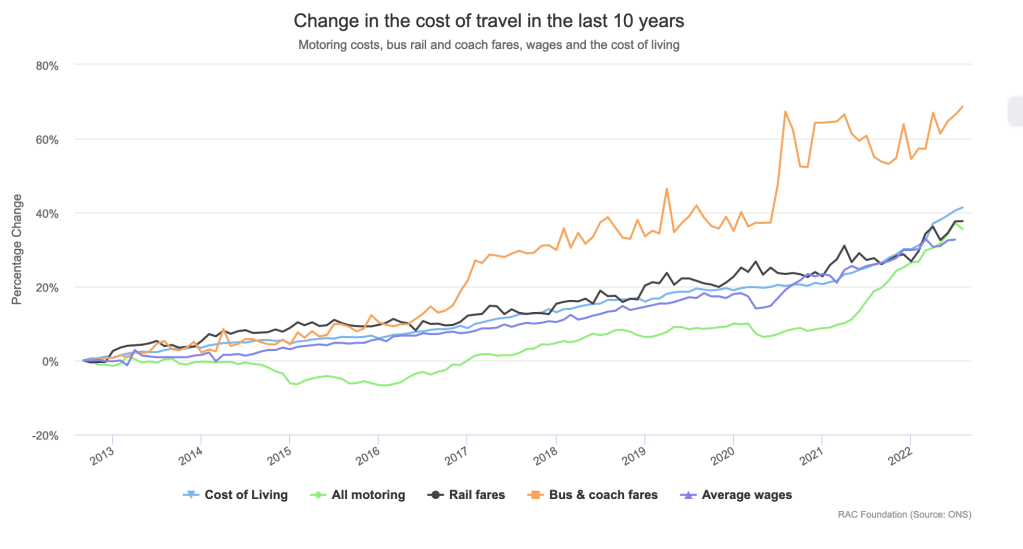
According to the Health Foundation, 6% of workers turn down a job or don’t apply for it in the first place because of transport problems – this rises to 18% for those who are unemployed. One reason could be that in while the transport system is designed for cars, a third of households don’t have access to one. For those that do, it’s about to get a whole lot worse. According to the RAC, growth in the cost of motoring over the last 10 years has been consistently below the cost of living; between 2015 and 2017 it even dropped by 5%. This made cars increasingly affordable and shielded car owners from the real costs of commuting which by 2021 was just 10% higher than 2012, only half the full cost of living rise over the same period.
A year on, motoring costs are rising much faster than the average cost of living. RAC figures show that motoring costs are now 39% higher than in 2012. In comparison, wages have gone up only 32%. It’s easy to see that even middle income earners are about to find out that they can’t afford to drive their car.
Is there an alternative?
The problem with buses
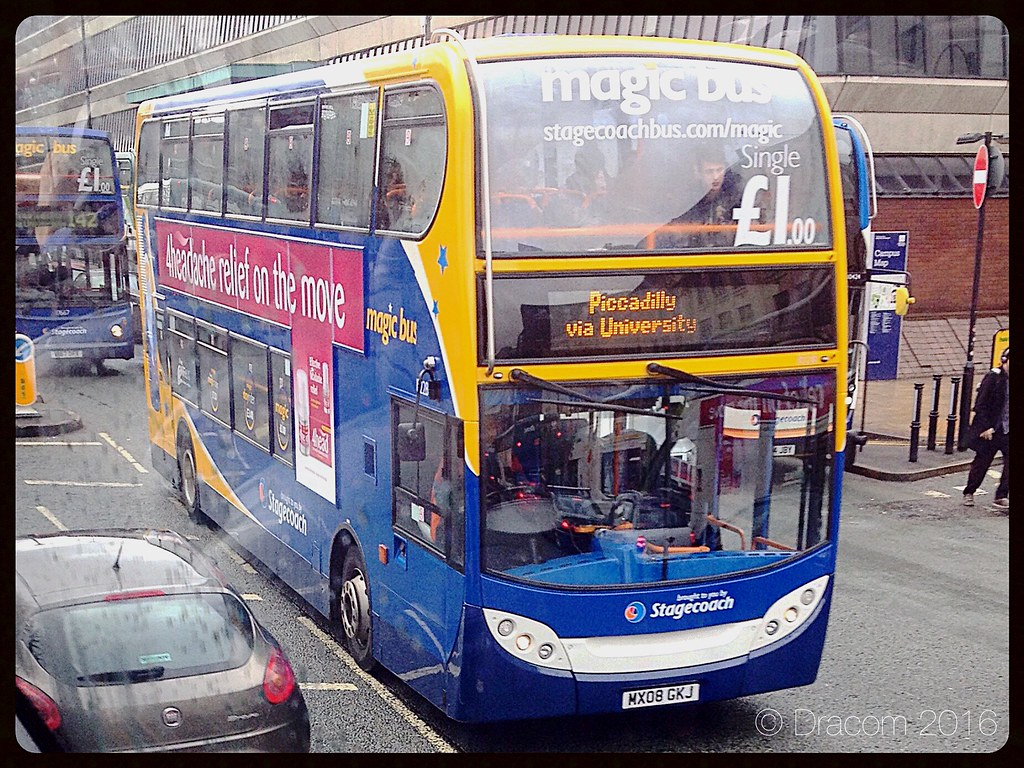
People could take the bus, except that many view them as too expensive, unreliable and don’t even go where they want them to. Unlike cars, the cost of taking a bus has increased by 66% since 2012, massively increasing in 2017. As this happened, the number of users dropped leading to services being cut and a self-fulfilling downward spiral of users. This will be exacerbated this autumn when COVID-19 subsidies end, and more bus services are cut.
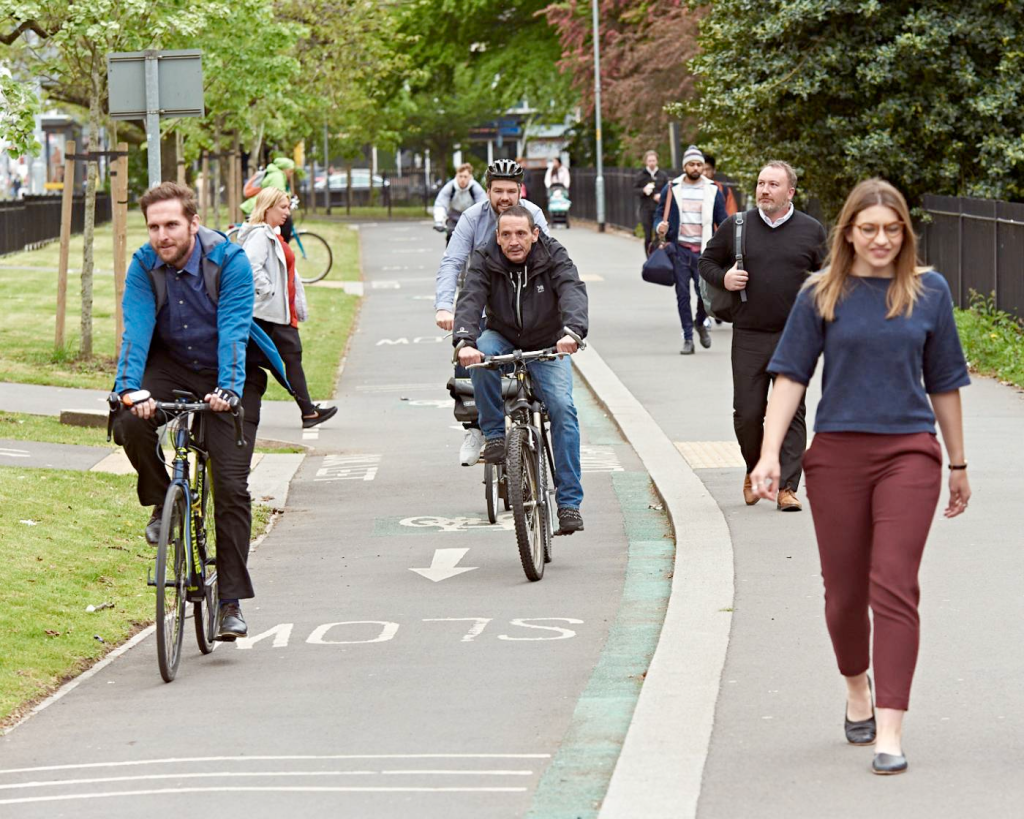
One visionary is Andy Burnham, the Mayor of Greater Manchester, who has pledged to create a London-style network with maximum fares of £1 for a child and £2 for an adult, anywhere in Greater Manchester. At the same time, he’s invested in active travel infrastructure and appointed Dame Sarah Storey as the new Active Travel Commissioner (replacing Chris Boardman). The vision? To give people as many low-cost transport options as possible to take them where they want.
What if we were to go one step further? Why not make all buses free for two years?
Apart from cost (which we will come to later) what would the consequences be?
Firstly, free buses would ensure that the third of us without cars could get to work; this would also help middle-income earners suddenly finding cars a luxury they can’t afford. While this sorts out the short-term problem, 2 years of free buses would also kick-start a transport revolution to support the kind of economic growth the politicians seem to want.
Private sector bus companies would have time to sort out the perceived and real problems of public transport – in any deal, this should be mandated. With fewer cars on the road, local authorities would get the chance to improve the road infrastructure with less inconvenience to commuters, using the £2 billion of active travel funding already promised by the government. Bus lanes, pavements, crossings and cycle routes could all be improved in the trial period to create alternatives to the car which is increasingly seen as a harmful polluter, especially and ironically for those least able to drive (children, people living in deprived areas).
Too expensive?
How much would this cost, you ask? If we were to use the same borrowing approach taken by the government on energy and taxes, then funding all the buses in Great Britain (not including London, which has its own deal) would cost around £7.3 billion for two years. This is around £12 per year per taxpayer over 25 years (£312 in total), a little over 1% of the cost of the energy cap giveaway.
The crux is that it would help people without a car or who can’t afford one to get to work; it would reduce congestion for those who do use one; and it would set up our transport system for the future and help economic growth. I haven’t even mentioned the positive impact it would have on the nation’s health – that’s for another time.
Not only does this seem sensible, in contrast to other spending commitments it appears eminently affordable. We really do need to get Britain moving.


 Steve Haake